Wednesday 30 September | 7.00–8.30pm | Online
Scottish Rural Action’s 2026 Annual General Meeting was preceded by a workshop exploring the Scottish Government’s proposed Last Provider Fund and how it could help protect essential services in rural and island communities.
The workshop brought together people working in and with rural communities to discuss the challenges faced when vital local services are at risk of disappearing. Rachel Canning from the Scottish Government’s Rural Communities Policy Team explained that the development of the fund is still at an early stage and that the team is keen to hear directly from communities about gaps in existing support, barriers to intervention and what future funding could look like.
A key part of the discussion was a presentation from Ali Upton of West Ardnamurchan Community Development Company, who shared the community’s experience following the closure of its local shop, post office and fuel station. With the nearest alternatives difficult to access, the community came together to provide an interim pop-up shop, raise funds through crowdfunding and reinstate the post office. The community is now nearing completion of a new community-owned shop and fuel facility, which will be leased to a private operator, with the ambition of creating a wider community hub.
Ali highlighted the importance of community involvement, volunteers, local and diaspora support, partnerships with other community organisations and ongoing dialogue with residents. The new shop is also being developed with a wider community role in mind, including potential links with support for more vulnerable residents.
The discussion that followed explored the wide range of services that can be critical to rural communities, including shops, post offices, fuel stations, schools, care and respite services, community spaces, sports facilities and transport. Participants also highlighted the importance of considering support for existing private providers before services reach the point of closure, alongside community ownership models. There was a strong call for a long-term vision for rural services that recognises the very different circumstances of remote and island communities, rather than relying on urban-based measures of accessibility or viability.
SRA will now bring together the contributions from the workshop and Miro board and share them with the Scottish Government Rural Communities Policy Team to help inform its thinking on the Last Provider Fund.
SRA’s 2026 AGM
The workshop was followed by SRA’s 2026 Annual General Meeting, which marked an important moment of transition for the organisation.
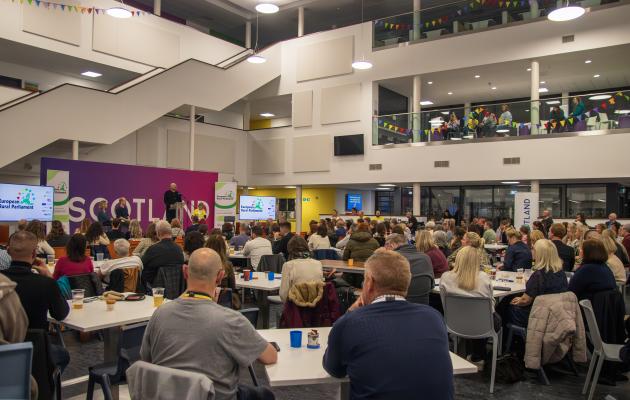
Outgoing Chair Theona Morrison reflected on SRA’s work and the achievements of recent years, including the successful European Rural Parliament, the development of the Declaration of Inverurie, the forthcoming Scottish Rural & Islands Parliament in the Scottish Borders, and SRA’s continuing work to ensure rural communities have a strong voice in national policy and decision-making.
Theona also reflected on the importance of ensuring young people have a right to stay and return to their rural communities, alongside the wider challenges facing rural areas across Scotland and Europe.
Members took the opportunity to thank Chair Theona Morrison, Vice Chair Brian Cameron and Honorary President Vanessa Halhead for their longstanding contribution to SRA. Their leadership and commitment have helped shape the organisation and its role within Scotland’s rural movement.
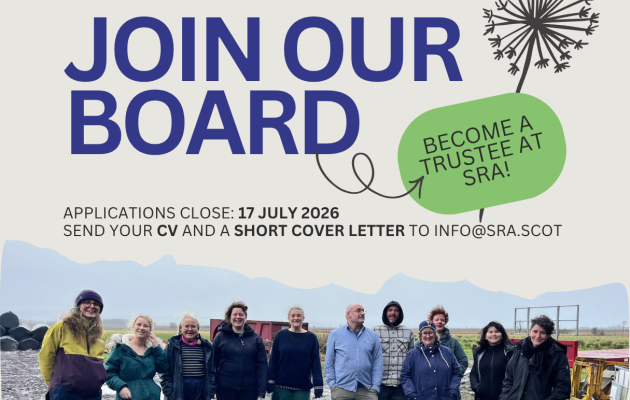
The AGM also welcomed a new group of Board Directors, including Helen Keron, Ewen McLachlan, Carolina Borda, Scott Petrie, Kirsty Bain-Wyse and Douglas Scott, bringing new experience and perspectives to SRA’s Board.
Looking ahead, the AGM highlighted the importance of preparing for the 2027 Scottish Rural & Islands Parliament, strengthening SRA’s networks and advocacy, developing stronger connections with Community Councils, advancing work around health and social care, and continuing to ensure that rural voices are reflected in policy and public service reform.
The evening closed with a sense of gratitude for the contribution of those leaving the Board and optimism about the next chapter for Scottish Rural Action — continuing to bring rural communities together, strengthen their collective voice and support them to shape the future of rural and island Scotland.